
"organic coffee Bolivia"
300 article(s) found
Bolivian Javanese flavor description of Bolivian manor features
Bolivia is one of the poorest countries in Latin America, a landlocked country bordering Brazil and Colombia. Although it is a country with great potential for coffee exports, its production has been quite scarce and the conditions for growing coffee are excellent, but the challenges are also extremely daunting, resulting in an extraordinarily rich agricultural history built on a very difficult land. Bolivir

The taste of long-lasting boutique Bolivian coffee introduces Yongas, northeast of La Paz.
Dry aroma: a variety of flowers, sweet vanilla, full aroma, sweet spices, wet honey: floral, refreshing perfume, sweet chocolate, berry sips: many kinds of flowers, excellent cleanliness and fineness, advanced vanilla sweet, delicate sugar, peach, apricot, sour and sweet, advanced Burgundy red wine, vanilla, green apple, white grapefruit, essential oil aroma, fine touch

What are the steps of Bolivian coffee brewing for Bolivian coffee brands
Professional baristas Please pay attention to the Coffee Workshop (Wechat official account cafe_style) Bolivian coffee has the advantages of high altitude and excellent coffee varieties, where the traditional Tibica and a small amount of Kaddura are highly regarded on the world market. In the past, coffee trees in Bolivia used to act as hedges and ornaments around the garden. Real commercial production comes from

Bolivian coffee hand data how to drink Bolivian coffee
For the exchange of professional baristas, please follow the coffee workshop (Wechat official account cafe_style) in Bolivia. 15g powder, medium grinding (small Fuji ghost tooth cutter 4 grinding), v60 filter cup, 88-89 degrees water temperature, 30g water injection for the first time, steaming for 27 seconds, water injection to 105g water cut off, wait for the powder bed water to drop to half and then water injection, slow water injection until 225g water, the end section is not
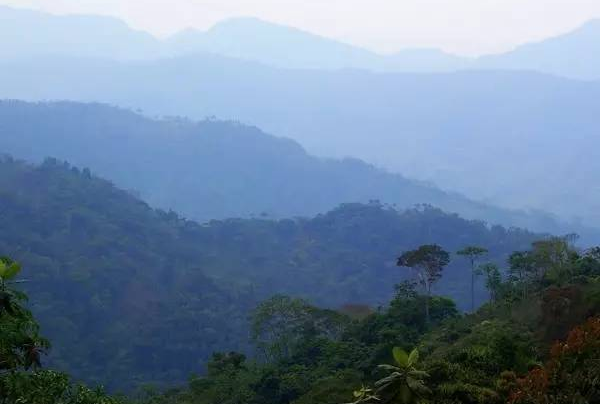
Description of taste and flavor of coffee beans for solitary travelers in Dark Arts, Bolivia
Follow the caf é (Wechat official account vdailycom) found that the Beautiful Cafe opened its own small shop in Bolivia Suapi comes from the La Paz producing area. Outside the city of Caranavi, coffee cherries are processed on a small farm, peeled and peeled mechanically, fermented in a small fermentation tank overnight, and then washed after fermentation.

Introduction to the Fine Coffee Bean Manor in the Coffee Variety producing area of Snow vein Manor in Bolivia
The legal capital, the seat of the Supreme Court, with a population of 284000, 2790 meters above sea level. Founded in 1538, the city was formerly known as Chuquisaka. The city witnessed the first uprising in South America against Spanish rule in 1809. Bolivia declared its independence here in 1825 and became the capital in 1826. In 1839, it was renamed Sucre to commemorate the second president of Bolivia, General Antonio Jos é Sucre.

Bolivian coffee producing areas introduce how to brew Bolivian coffee.
For the exchange of professional baristas, please follow the coffee workshop (Wechat official account cafe_style) in Bolivia. 15g powder, medium grinding (small Fuji ghost tooth cutter 4 grinding), v60 filter cup, 88-89 degrees water temperature, 30g water injection for the first time, steaming for 27 seconds, water injection to 105g water cut off, wait for the powder bed water to drop to half and then water injection, slow water injection until 225g water, the end section is not

The empty Flavor of Bolivian Coffee introduces Yongas, northeast of La Paz, the snow vein estate.
Takesi Manor, drinking water and coffee after harvest treatment, using alpine melting cold snow landscape, so we give her a nickname: Takesi Snow vein Manor; in addition to low temperature, pollution-free environment, fertile and well-drained volcanic soil, is also an element of coffee flavor, although the owner of Agrotakesi SA is rich, but deep respect for nature and the way to get along, but

Home-baked boutique coffee (1) Bolivia
It is autumn, and the weather is getting cooler. Autumn is crisp, and the training that has been drilled into the roaster all summer has finally yielded some results before the arrival of this autumn. For baking, it is a touch of the door, and finally a little breath: Oh! It turns out that the baking method can be found out. Compared with the hot summer, it seems that every bean in autumn can impress people with its own unique taste.

Introduction to Bolivian Coffee Manor with refreshing perfume and sweet chocolate
The goal of planting coffee in the whole Takesi manor is 200ha, but only 13ha is planted and harvested very little Typica species, and the annual yield is only 120bags. This is not only fine agriculture, but also a farming model that respects nature. Takesi is the name of the local aborigines, the place name and the snow water from the mountains, also known as Takesi. After the publication of the CoE final in 2009, Takesi is no longer without.
Introduction to Bolivian Coffee Manor with various flowers, sweet vanilla, full aroma and sweet spices
I remember that the admirable champion bean in 2007 was Coffee Manor, but her score was overtaken by the 2008 champion Caf de Cordillera, when the international judges gave it a high score of 92.03. in 2009, Takesi Snow vein Manor got a score of 93.36, surpassing the champion of 2008, and the bidding price was as high as US $35.05. it was the highest bid in the CoE national competition in 2009! Osher has been for three years in a row

Bolivian coffee beans with varied floral aromas, vanilla and honey
Bolivia's high-quality estates, very high altitude, perennial low temperature environment, so that coffee fruit growth is slow, tight enough, aroma is also charming, floral aroma is obvious, such as careful handling, cherries with the same maturity, often have a clean and meticulous high-end taste, this elegant vanilla and honey aromas are very attractive, this champion bean has a variety of floral aromas, vanilla and sweet very long-lasting. To

Bolivia Coffee Manor production area introduction of boutique Coffee beans Coffee Manor
Although coffee is diverse, Brazilian coffee is suitable for the taste of the public. For example, coffee produced in the northern coastal areas has a typical iodine taste, reminiscent of the sea after drinking. This coffee is exported to North America, the Middle East and Eastern Europe. Another kind of coffee that is interesting and worth looking for is washed Bahia coffee. This kind of coffee is not easy to find because Ji Mei

Bolivian Coffee Manor introduces boutique coffee Bolivian coffee flavor and taste
The goal of planting coffee in the whole Takesi manor is 200ha, but only 13ha is planted and harvested very little Typica species, and the annual yield is only 120bags. This is not only fine agriculture, but also a farming model that respects nature. Takesi is the name of the local aborigines, the place name and the snow water from the mountains, also known as Takesi. After the publication of the CoE final in 2009, Takesi is no longer without.

Bolivian coffee beans with floral scent and refreshing perfume introduce fine coffee
The goal of planting coffee in the whole Takesi manor is 200ha, but only 13ha is planted and harvested very little Typica species, and the annual yield is only 120bags. This is not only fine agriculture, but also a farming model that respects nature. Takesi is the name of the local aborigines, the place name and the snow water from the mountains, also known as Takesi. After the publication of the CoE final in 2009, Takesi is no longer without.
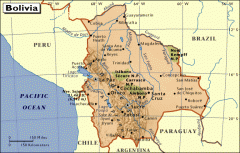
Home-baked boutique coffee (1) Bolivia
It is autumn, and the weather is getting cooler. Autumn is crisp, and the training that has been drilled into the roaster all summer has finally yielded some results before the arrival of this autumn. For baking, it is a touch of the door, and finally a little breath: Oh! It turns out that the baking method can be found out. Compared with the hot summer, it seems that every bean in autumn can impress people with its own unique taste.

High-quality Bolivian coffee flavor introduces Yongas, northeast of Xuemai Manor La Paz
Cup test code #: CAR-003 Bolivia's high-quality estates, very high altitude, perennial low temperature environment, so that coffee fruit growth is slow, tight enough, aroma is also charming, floral aroma is obvious, such as careful treatment, cherries with the same maturity, often have a clean and meticulous high taste, this elegant aroma of vanilla and honey is very attractive, this champion bean has a variety of floral aromas, vanilla and vanilla

Taste of Bolivian Coffee Flavor Flavor Coffee introduced in Manor production area
The goal of planting coffee in the whole Takesi manor is 200ha, but only 13ha is planted and harvested very little Typica species, and the annual yield is only 120bags. This is not only fine agriculture, but also a farming model that respects nature. Takesi is the name of the local aborigines, the place name and the snow water from the mountains, also known as Takesi. After the publication of the CoE final in 2009, Takesi is no longer without.

How does Bolivian coffee taste? how does Bolivian coffee brew?
For the exchange of professional baristas, please pay attention to the flavor of coffee workshop (Wechat official account cafe_style): dry aromas of roasted nuts and almonds, supple acidity of orange and white pomelo on the entrance, sweet caramel on the whole, smooth texture of firm fruit milk, cleanliness and balance, and attractive herbal aroma in finish. Bolivian coffee has a rich and unique aroma, regardless of

Introduction of Yongas Snow vein Manor in the northeast of La Paz
The goal of planting coffee in the whole Takesi manor is 200ha, but only 13ha is planted and harvested very little Typica species, and the annual yield is only 120bags. This is not only fine agriculture, but also a farming model that respects nature. Takesi is the name of the local aborigines, the place name and the snow water from the mountains, also known as Takesi. After the publication of the CoE final in 2009, Takesi is no longer without.